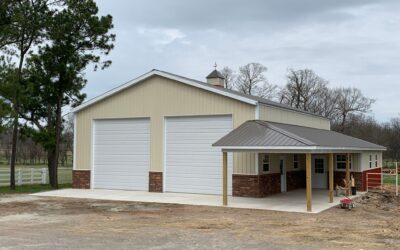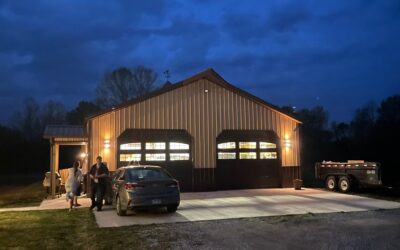

When you’re weighing a conventional stick‑built home against a barndominium on Oklahoma land, it’s easy to get lost in the hype: huge rooms, open workshops, farmhouse style “barn living,” and the promise of cost savings. But the reality is less about buzzwords and more about practical decisions. You’ve got land. You’ve got goals. You’ve got budget, timeline, and lifestyle factors. The right decision emerges only when you compare the real details: cost per square foot, materials, zoning, resale, and how future‑proof the building will be.
That’s why we at Bradford Buildings believe in a clear, honest comparison of “barndo vs. traditional home” — because our job isn’t just to build whatever you pick; it’s to help you pick what’s right for you. This isn’t marketing fluff. It’s the kind of straight talk great builders deliver.
True Cost Per Square Foot: How Barndos Stack Up
One of the first advantages often cited for barndominiums is cost. Several data sources show that barndos typically cost less per square foot than traditional homes, especially when built with a metal or post‑frame shell and minimal interior walls. For example:
-
A recent study shows metal barndominiums in 2025 average between $60 – $160 per square foot, compared to typical stick‑built homes at $150 – $400 per square foot. Houseplans.com+1
-
Another nationwide data set shows the cost to build a barndominium in Oklahoma ranges around $62 – $152 per square foot. HomeGuide
-
A conventional home in many areas runs around $100 – $200 per square foot, with numerous variables pushing it higher. Realtor+1
In simple terms: if you’re looking for more square footage per dollar, a barndominium often has the edge. But—and this is key—that lowest cost assumes fewer interior finishes, simpler layouts, and a shell that’s already installed. If you dress it up like a traditional home, the savings shrink or vanish.
As you plan your build, ask yourself: How many walls, how high the ceiling, how customized the finishes? At Bradford Buildings, we walk you through exactly how the choices you make influence per‑square‑foot cost, so you get a realistic budget early on.
Speed, Efficiency & Build Style
Barndominiums tend to be faster to build. That’s partly because the shell is simpler, often made with metal panels, fewer interior walls, and prefabricated components. Some sources note that barndos’ construction process has fewer labor hours, fewer payments, fewer delays. Extra Space Storage
For Oklahoma property owners, speed matters. Whether you’re moving off an older home, relocating for work, or converting farmland into a house/workshop, the faster you’re under roof, the faster you can begin living, working or generating value.
Bradford Buildings uses proven post‑frame and metal building systems that support both barndo living and traditional house layouts. That means whether you opt for a barndo or a house, you get a build process that’s well documented, highly controlled, and designed around Oklahoma’s permit and weather conditions.
Material Choices & Structural Considerations
Traditional homes use wood‑framing, multiple load‑bearing walls, complex HVAC and insulation systems, and many subcontractors. Each piece adds time, cost and risk. Barndominiums often use post‑frame or steel construction, fewer interior walls, and open‑plan layouts. That can translate into fewer weak spots, less structural redundancy, and—in the right design—lower long‑term maintenance.
One benefit often overlooked: flexibility. In a barndo, you may have fewer interior walls, making future reconfigurations (adding a workshop, dividing living area) easier. One commenter observed that since barndos often have no interior load‑bearing walls, you can adapt your space later without massive cost. Reddit
From Bradford’s perspective, if you pick a barndo, we still integrate local‑code structural design, quality insulation, residential‑grade finishes. If you pick a traditional home, we bring the same level of materials and workmanship—but you’ll see a different cost structure.
Zoning, Permits & Lender Issues
Here’s where things get real: even if a barndominium looks like a great deal, the next step is local approvals and financing. Traditional homes follow a well‑worn path: lender approvals, appraisals, building permits — all standard. Barndominiums don’t always fit standard templates. davis-custom-homes.com
In Oklahoma and NW Arkansas, you’ll want to check:
-
Local zoning or homeowners association restrictions: some areas don’t allow “metal exterior homes” or “barn‑style residences” without special approval.
-
Insurance and mortgage classification: some lenders treat a barndominium as a metal building or agricultural structure rather than a conventional home, which can affect loan eligibility or interest rates.
-
Utility and mechanical code: a barndo shell is one thing; turning it into full livable space is another. HVAC, insulation, plumbing all must meet residential codes.
-
Resale market dynamics: prospective buyers may view non‑traditional homes with more scrutiny, especially if they plan to resell in a decade.
Bradford Buildings addresses these issues proactively. We help you document materials, structure, utilities, so your build qualifies for residential zoning and appraisal. That means we’re not just building the structure — we’re building your future home or investment with all the pieces in place.
Lifestyle, Layout & Flexibility
Next question: what will you use your structure for? One of the greatest appeals of barndominiums is their versatility. Living space, workshop, garage, storage, even agricultural use —all under one roof. Traditional homes offer more conventional layouts, separate rooms, multiple floors, often less space for big equipment or vehicles.
If you’re planning:
-
A home with a workshop and RV parking
-
A residence with storage for tractors, ATVs, or farm gear
-
An open floor plan, high ceilings, mezzanine or loft space
Then a barndominium may align well. If your priority is: a neighborhood look, resale in urban/sub‑urban market, traditional aesthetics, then a conventional home may serve better.
At Bradford Buildings we’ve guided clients in Oklahoma and NW Arkansas on both models. If you want the “barn‑with‑home” look, we’ll design an efficient barndo that offers residential comfort and workplace utility. If you prefer a conventional residence, we’ll guide you through a custom‑home build using post‑frame or steel, which can still offer durability and cost‑efficiency.
Maintenance & Long‑Term Value
Cost today isn’t the whole story. What about 10, 20, 30 years down the road? Metal‑ and post‑frame structures tend to have lower maintenance demands than stick‑frame homes, especially in rural settings. Common advantages:
-
Metal siding and roofs resist rot, termites, fire, and severe weather.
-
Open spans and durable framing allow easier conversions or expansions.
-
Fewer interior walls means fewer opportunities for settlement cracks, water intrusion or drywall issues.
According to review data, barndominiums constructed properly can last 50+ years with basic upkeep, and the savings in maintenance begin to stack up. Today’s Homeowner
However: resale value depends on finishes, neighborhood, and market. Traditional homes have the longest track record, which some buyers find more reassuring. Also, interior finishes, heating/cooling systems and aesthetic design still matter significantly regardless of whether it’s a barndo or a house.
Bradford Buildings always integrates durable materials and residential‑grade finishes in our builds, whether you pick barndo or traditional. We believe that long‑term value comes from materials, craftsmanship and location — not just labels.
Cost Breakdown: What to Expect for Oklahoma Builds
Let’s anchor the discussion in real numbers relevant for Oklahoma/NW Arkansas builds. Data show that barndominiums in these states can run around $62‑$152 per square foot in many cases. HomeGuide
Factors that will affect your cost:
-
Site preparation: grading, utilities, road access
-
Shell vs. finished living space: Do you want bare‑bones or full residential finish?
-
Mechanical systems: HVAC, plumbing, electrical, insulation
-
Custom features: lofts, high ceilings, specialty doors, windows, finishes
-
Permits and local code requirements
Example scenarios:
-
A 2,000 sq ft shell‑package barndo on a prepared site might cost you around $125,000 (rough estimate at $62 per sq ft)
-
A high‑end barndo with full residential finishes might cost $320,000 or more ($160 per sq ft)
-
A full conventional home of same size, depending on finishes, might cost $200,000‑$340,000 or more. Today’s Homeowner
At Bradford Buildings, when you bring us your budget and land, we help you map these variables. What’s your ideal finish level? How much of your space will be living vs. shop/storage? We build accordingly. Our goal is to ensure you don’t over‑pay for unused space or under‑invest in features you’ll regret later.
Decision Checklist: Barndominium or Traditional Home?
Here’s a practical checklist to walk yourself through what matters before deciding. Answer honestly, and you’ll get a clearer sense of your best path:
-
Do you want workshop or equipment space built in from day one?
-
Do you plan to store large vehicles, farm gear, or want a loft/mezzanine?
-
How important is resale in a traditional neighborhood vs rural acreage?
-
Do local zoning and lending standards favor conventional homes or are rural builds acceptable?
-
What level of finishes (countertops, flooring, HVAC) do you expect?
-
Do you have a build timeline that demands faster completion?
-
Is long‑term maintenance a major concern (e.g., options for metal siding and fewer walls)?
-
How much flexibility do you want if your lifestyle changes (rental, workshop, hobby space)?
If you answered “yes” to many of the equipment/space/flexibility questions, a barndominium may make sense. If you answered “neighborhood resale,” “traditional aesthetics,” and “typical financing” then a conventional home may be safer.
A Strong Partner Makes the Difference
Choosing between a barndominium and a traditional home isn’t just about style or cost — it’s about aligning your land, lifestyle and budget with a building type that supports your future. At Bradford Buildings, we specialize in both. We have decades of experience building post‑frame homes, metal buildings, barns and multi‑use structures across Oklahoma and NW Arkansas.
What that means for you:
-
We know the permit process in counties, towns and unincorporated areas across both states.
-
We understand local weather, soil conditions, wind and snow loads — all critical for an enduring build.
-
Whether you pick a barndominium or traditional home, we apply proven systems, quality materials and dependable timelines.
-
From our first meeting, we walk you through cost implications, utility access, maintenance expectations and long‑term value so you decide confidently.
If your vision includes not just a place to live but a space to store, work, create, play, or let evolve over time, let’s talk. If your vision is a traditional home but you want the durability and flexibility of post‑frame or metal construction, we can build that too.
We invite you to send us what you’re thinking: your land address or parcel number, your ideal square footage, how many vehicles or tools you’re storing, and how you want to live. We’ll provide a clear cost outline for both a barndominium style and a traditional home style. Then together we’ll decide which route makes the most sense for you — because the right choice now means fewer regrets later.
We’re ready when you are.